
![Nollywood actor CJay Nwoks dies in Lagos hospital [VIDEO]](https://primenewz.ng/wp-content/uploads/2026/09/CJAY-WOKS.jpeg)

U.S. President Donald Trump has declared a new name for artificial intelligence, announcing that the technology will henceforth be referred to by the federal government as “Super Intelligence” (SI).
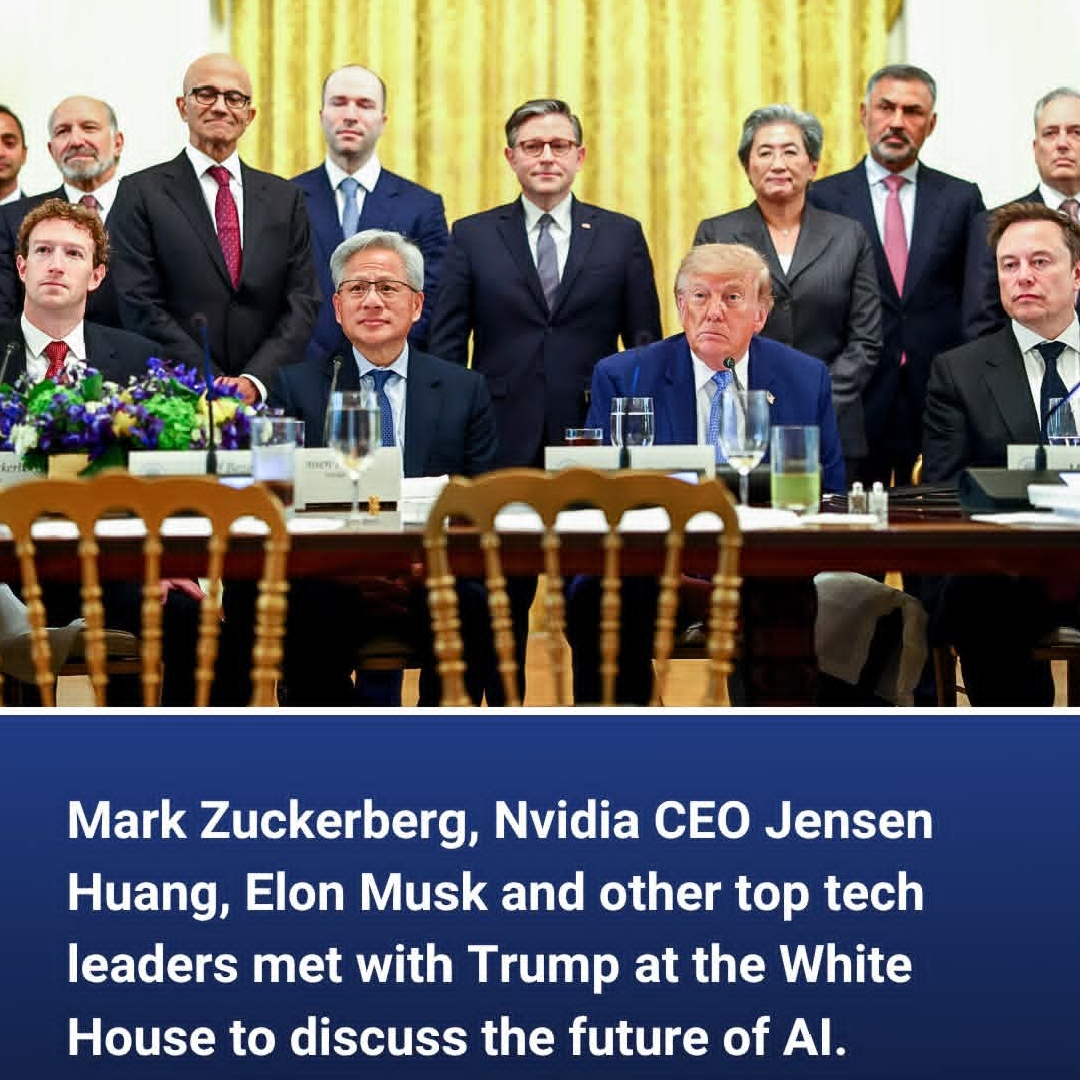
Trump announced this on Tuesday, September 29, 2026, after hosting some of the world’s most prominent technology executives at the White House, including Elon Musk, Meta CEO Mark Zuckerberg and Nvidia CEO Jensen Huang.
The gathering produced both a major terminology shift and a voluntary industry agreement intended to establish safeguards for the rapidly advancing technology.
In an executive order titled “Inaugurating the Era of Super Intelligence,” Trump directed U.S. executive-branch agencies, to the extent permitted by law, to use “Super Intelligence” and “SI” instead of “Artificial Intelligence” and “AI” in official correspondence, websites, reports, policy documents and other non-statutory communications.
The order defines SI, for now, as covering technologies and systems encompassed by the existing statutory definition of artificial intelligence, while directing the administration to develop proposed legislative language for a federal definition of “Super Intelligence” within 60 days.
Trump said the change reflects the increasing capabilities of the technology.
“It’s not AI, it’s SI,” Trump said during a post-meeting exchange with reporters, adding that the name had been “officially changed” to Super Intelligence.
Tech Giants Agree To Self-Police
Beyond the rebranding, Trump and executives from major technology companies signed a voluntary agreement aimed at strengthening safeguards around increasingly powerful AI systems.
The White House accord calls for companies to establish robust internal controls, conduct risk reviews, work with independent external auditors and have company boards independently review audit findings. Zuckerberg described the framework as a starting point rather than a final industry standard.
Trump described the agreement as “morally binding”, while acknowledging that it is voluntary rather than a legally enforceable regulatory regime.
The administration has framed industry self-regulation as a way to encourage rapid technological development while addressing safety concerns and preserving U.S. leadership in an increasingly competitive global technology race, particularly with China.
Safety Takes Centre Stage
Nvidia CEO Jensen Huang said technological advancement and safety should not be treated as competing objectives.
“We are going to have to create new technologies to advance the capabilities of AI, but we’re also creating new technologies to strengthen its safety,” Huang said.
Anthropic CEO Dario Amodei similarly highlighted what he described as the technology’s significant potential in areas such as medicine, while acknowledging that it also presents substantial risks.
“AI has incredible benefits,” Amodei said before catching himself and adding, “S.I., pardon me.”
The exchange reflected how quickly the administration’s new terminology was being adopted – at least inside the White House event.
Even Musk Catches Himself
Elon Musk also became part of the terminology drama when he initially referred to the technology as “AI” during the White House gathering before correcting himself to “superintelligence.”
The meeting brought together executives and representatives from several major technology companies, including Meta, Nvidia, Google, OpenAI, Anthropic and xAI.
The White House gathering comes as governments, technology companies and researchers worldwide grapple with how to harness increasingly capable AI systems while addressing questions around safety, cybersecurity, misuse, accountability and human oversight.
For the Trump administration, however, the message from the White House is clear: America wants to accelerate the technology, keep its strategic lead and rely heavily on the industry itself to help police the frontier it is creating.
And from now on, at least in official U.S. executive-branch language, AI has a new identity: SI – Super Intelligence.