


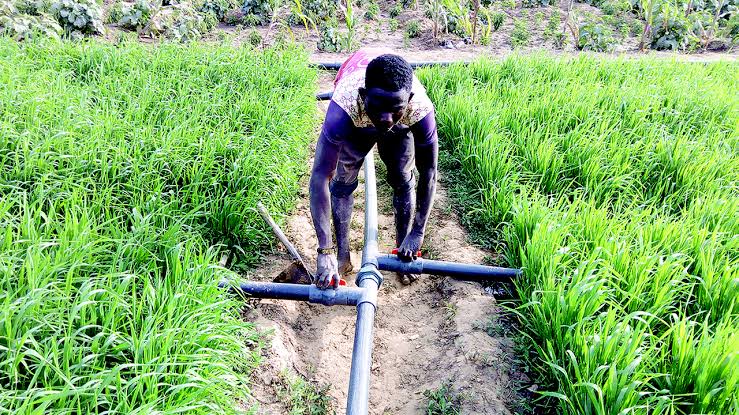
Rising fuel costs and unpredictable rainfall are putting increasing pressure on farmers in Niger State, with agricultural stakeholders now pushing solar-powered irrigation as a way to reduce production costs and keep farms running beyond the rainy season.
The call was made at a Demand-Supply Linkage, Financing Options Workshop and Field Demonstration on Solar-Based Irrigation Systems organised by the International Water Management Institute (IWMI) in Minna, where government, farmers, financial institutions, equipment suppliers and development partners explored ways to make the technology accessible to smallholders.
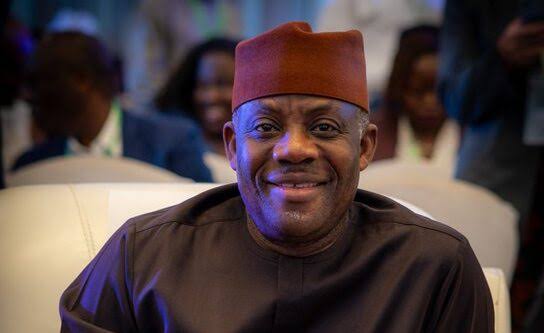
The Niger State Commissioner for Agriculture Hon. Isah Sidi Rijau said the state’s huge agricultural potential could not be fully realised if farmers continued to depend almost entirely on rainfall, particularly as changing climatic conditions were making farming increasingly unpredictable.
He said solar-based irrigation could expand dry-season farming, boost productivity, improve food security and strengthen farmers’ livelihoods, but warned that simply introducing the technology would not solve the problem without affordable financing, reliable suppliers, technical support, extension services and stronger cooperatives.
The commissioner urged financial institutions to develop financing models tailored to smallholder farmers, while calling on farmers to strengthen their cooperatives and responsibly manage financed equipment.
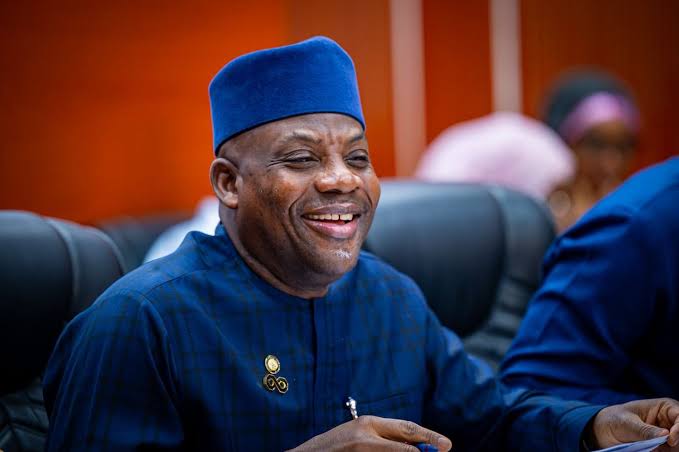
The Senior Regional Researcher of IWMI, Engineer Dr Adebayo Oke, said climate change was already affecting food systems and food security across Africa, making irrigation one of the critical adaptation strategies available to farmers.
Oke said the removal of fuel subsidy and subsequent increases in petrol prices had significantly raised the cost of operating conventional irrigation pumps, making solar-powered systems increasingly attractive to farmers.
He said the initiative could also create new opportunities for youths and women, who could operate irrigation and water-delivery businesses and provide services to farmers without necessarily owning farms themselves.
However, Oke acknowledged that the transition to solar irrigation faced a major hurdle such as the initial cost of purchasing the equipment — saying IWMI was working with financial institutions and suppliers to create more affordable credit arrangements.
He also stressed the need to prevent irrigation expansion from becoming another threat to water resources, saying IWMI was promoting responsible water use, particularly in Fadama and flood-plain areas that naturally recharge during the rainy season.
According to him, some of the systems being introduced can measure the quantity of water used, while farmers are being trained on sustainable irrigation practices to ensure that increased production does not come at the expense of water resources.
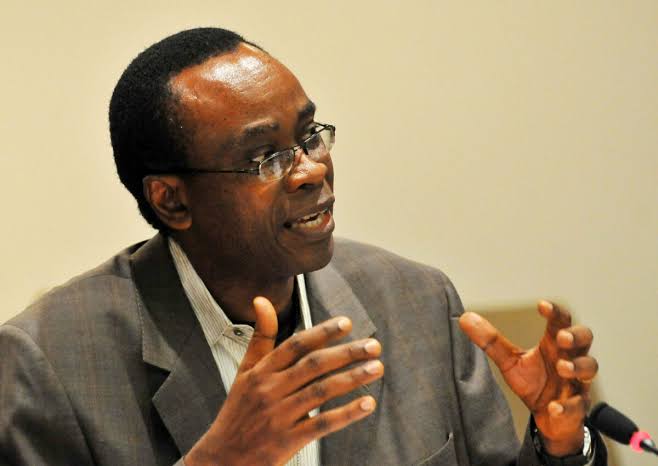
The Technical Lead, Consultant Professor Oluwashun Adebayo Ojeleye, said more than 70 per cent of Nigerians were engaged in agriculture, yet most farming remained rain-fed, limiting production largely to the rainy season.
Ojeleye said farmers could achieve dry-season and potentially multiple-season production through irrigation, but many currently depend on petrol-powered pumps whose running costs have become increasingly difficult to absorb.
He said solar irrigation could eliminate much of the recurring energy cost, but the entry price remained a major barrier, putting the cost of a two-inch pump at about ₦300,000–₦350,000 and a three-inch system at about ₦400,000–₦500,000.
He said a financing arrangement involving banks, suppliers and farmers could bridge the gap, allowing farmers to acquire the equipment, increase production and repay from their harvests.