



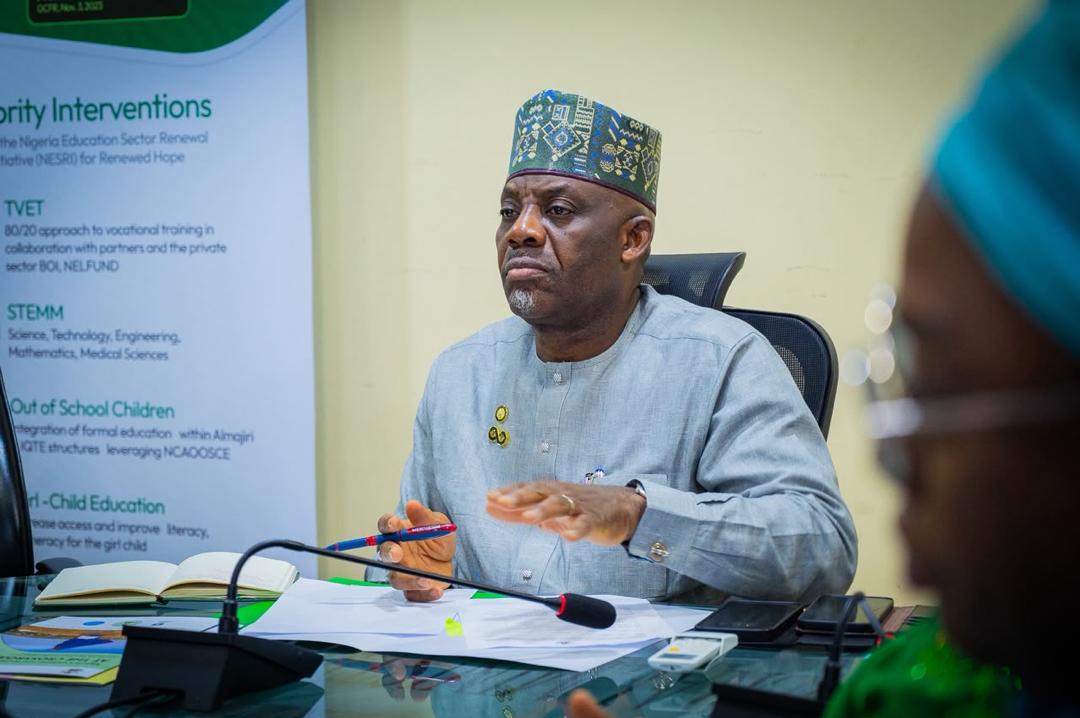
The Minister of Education, Dr. Maruf Tunji Alausa, CON, has said President Bola Ahmed Tinubu has delivered on almost 100 per cent of his promises during the 2023 presidential campaign, declaring that Nigeria is experiencing “tangible changes.”
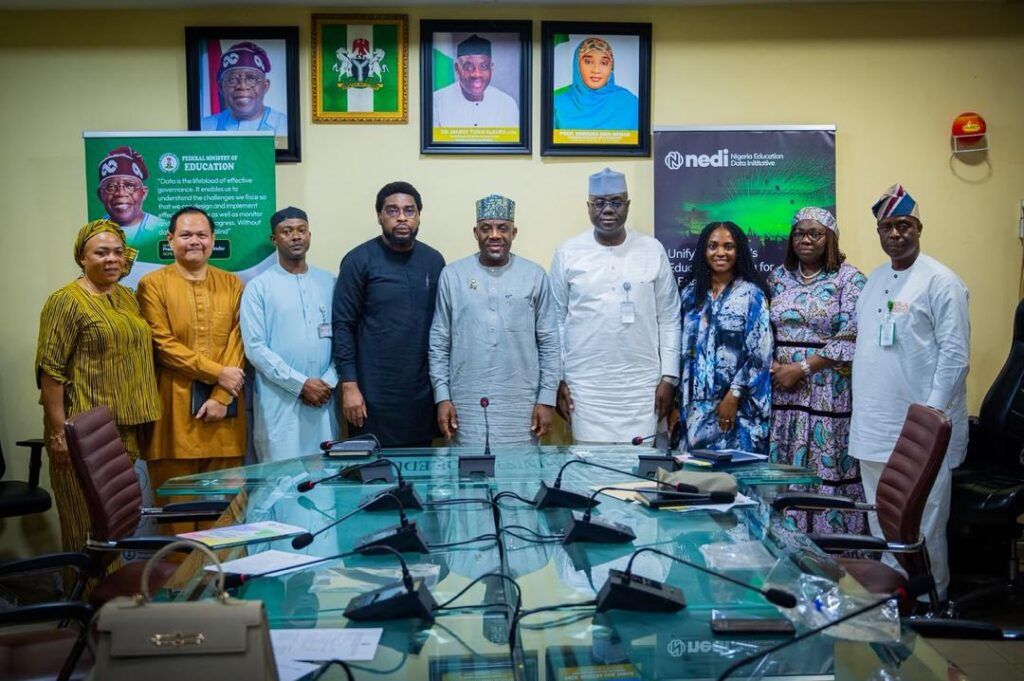
Alausa spoke in Abuja at the weekend while receiving the 2025 Nigeria 2050: Child Foresight Analysis for Futures Literacy and Intergenerational Equity, an initiative of the Office of the Vice President’s Anticipatory Governance and Foresight Capacity Programme, implemented with technical support from UNICEF.
The Child Foresight team was led by its Director General, Chris Ngwodo, and the Vice President’s Special Assistant on Special Duties, Mohammed Ahmed.
The minister said the report was significant given Nigeria’s youthful population, with about 70 per cent of its estimated 220 million people below 30. He said government must turn this demographic strength into a dividend through quality education, relevant skills, productive opportunities and long-term planning.
Alausa said the Tinubu administration had moved beyond the uncertainty that previously characterised national development and was now focused on consolidating gains while addressing remaining challenges.
“The country is not at a crossroads again. We have a lot of catching up to do,” he said.
He said education remained central to the administration’s ambition of moving Nigeria towards a $1 trillion economy, noting that the Nigerian Education Sector Renewal Initiative (NESRI) was driving reforms in Technical and Vocational Education and Training (TVET), STEM, teacher quality, quality assurance, reduction of out-of-school children, education data and digitalisation.
According to him, renewed investment in TVET was creating pathways for young Nigerians to gain practical skills, pursue entrepreneurship, secure employment and progress to higher education.
“Skills are the present and the future,” Alausa said, stressing that Nigeria could no longer afford an education system that failed to prepare young people for the modern economy.
He also linked investments in medical education to efforts to address skills shortages and migration pressures associated with “Japa.” He said government had expanded nursing education and increased training capacity in existing teaching hospitals, federal medical centres and specialist hospitals.
On out-of-school children, Alausa questioned longstanding estimates of between 15 million and 17 million, saying comprehensive household-level data was lacking. He cited Kaduna, where a survey covering more than 90 per cent of households reportedly recorded fewer than 190,000 out-of-school children, compared with an earlier estimate of about 585,000. Another Kaduna estimate of about 1.2 million, he said, fell to fewer than 100,000 after a general household survey. Jigawa had also recorded significant differences between existing estimates and household-level findings.
He said reliable data would help government identify excluded children, understand the causes, target interventions and monitor retention.
“Even if there’s significant reduction, any child out of school is still too many,” he said.
The minister disclosed that more than one million children had been moved from the streets into school nationally over the past two and a half years, while Jigawa alone had reportedly enrolled more than 180,000 children in two years.
He said the government was strengthening education planning through digital data. More than 56 per cent of public schools had entered their 2026 Annual School Census information, while 41 per cent of private schools had populated their records on the digitised Nigerian Education Management Information System (NEMIS).
“Without data, you’re flying blind. Data will tell you everything,” Alausa said.
He added that the Ministry had conducted a national assessment to establish baseline levels of literacy, numeracy and cognitive development among primary, junior secondary and senior secondary learners.
Alausa said the reforms were directly relevant to the Child Foresight Analysis, which seeks to embed long-term and systems thinking, adaptive innovation and youth participation in national planning.
He commended the Office of the Vice President, the Office for Strategic Preparedness and Resilience (OSPRE) and UNICEF for supporting the initiative, saying it could help move Nigeria from reactive governance to anticipatory action.
The minister said his ministry would align the findings with NESRI, particularly on future literacy, education planning, skills development, data systems and intergenerational equity.
He urged stakeholders to connect the foresight findings to tangible reforms, saying Nigeria had an opportunity to shape its future rather than wait for challenges to emerge.
“Nigeria has changed, and it has changed for good,” Alausa said.
The Nigeria 2050 Child Foresight Analysis examines the risks, opportunities and drivers likely to shape the lives of Nigerian children aged 0–17 and young people aged 15–35 towards 2050, with the aim of strengthening futures literacy, anticipatory governance and intergenerational equity in national planning.