


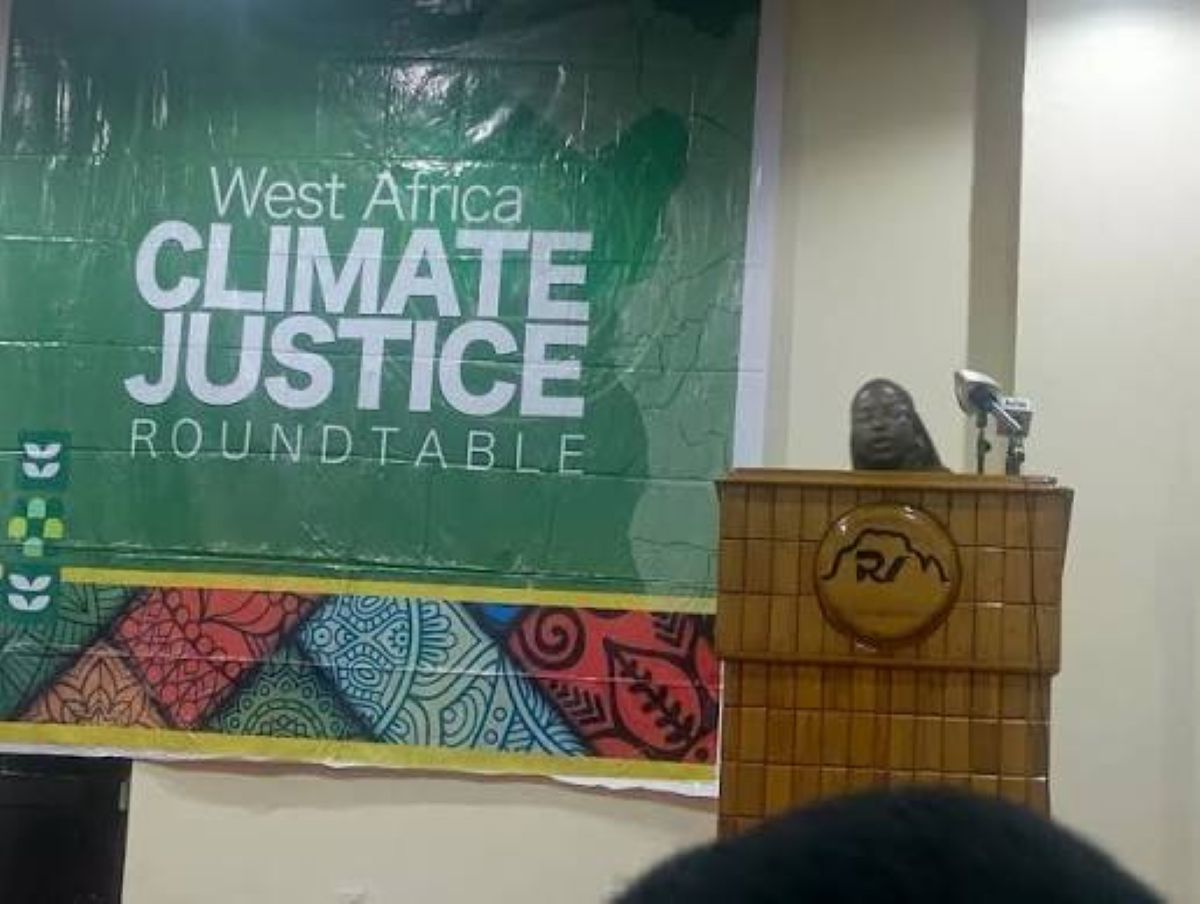
Climate justice advocates have called for stronger regional solidarity across West Africa, warning that fragmented efforts will weaken the region’s ability to confront the growing impacts of climate change and influence global climate policy.
The call was made at a gathering on “Building Solidarity for Climate Justice in West Africa,” where environmental campaigners, civil society organisations and community leaders stressed that collective action is critical to addressing climate-related challenges affecting the region.
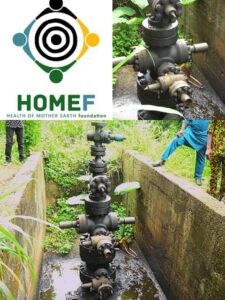
Delivering the opening remarks, environmental activist and Director of the Health of Mother Earth Foundation (HOMEF), Nnimmo Bassey, said solidarity is the cornerstone of any successful climate justice movement, arguing that countries and organisations in West Africa must work together to amplify their voices at continental and global levels.
He noted that although Africa has several climate justice movements, West Africa remains underrepresented, making it necessary for the region to build a stronger and more coordinated platform.
“Solidarity is the main ingredient for movement building. Without it, people may share the same pain and aspirations, but they will remain isolated and achieve very little,” he said.
Bassey warned that West Africa is increasingly vulnerable to climate change, citing rising temperatures, erratic rainfall, sea level rise, coastal erosion, desertification and forced migration as some of the region’s pressing environmental challenges.
He highlighted the plight of coastal communities in Nigeria, noting that some have lost significant portions of their land to the Atlantic Ocean due to rising sea levels and coastal erosion.
According to him, these climate impacts disproportionately affect vulnerable communities that have contributed the least to global greenhouse gas emissions.
Beyond climate impacts, Bassey criticised what he described as “false climate solutions,” including carbon offset projects, geoengineering and carbon trading schemes, arguing that they allow wealthy nations and corporations to continue polluting while shifting the burden to developing countries.
He raised concerns over large-scale land acquisitions for carbon offset projects across parts of West Africa, warning that such initiatives often result in land and forest grabs without benefiting local communities.
He cited examples of forest concession agreements in Nigeria, where vast areas of land have reportedly been allocated to foreign companies for carbon credit projects.
“These projects enable polluters elsewhere to continue emitting greenhouse gases while taking control of forests and community lands in Africa,” he said.
Bassey also criticised what he described as an unjust energy transition, arguing that the growing demand for critical minerals used in renewable energy technologies risks repeating the exploitation associated with fossil fuel extraction.
“A transition that simply replaces fossil fuels with another form of resource exploitation is not a just transition,” he said.
He questioned long-term net-zero targets adopted by governments, saying timelines extending to 2050 or 2060 fail to reflect the urgency of the climate crisis.
Instead, he urged governments and international negotiators to focus on immediate emissions reductions by countries historically responsible for the bulk of greenhouse gas emissions.
Calling for a stronger climate justice movement in West Africa, Bassey urged campaigners to build alliances across sectors, including labour unions, farmers’ organisations, indigenous communities, hunters’ associations and youth groups.
He also advocated for the expansion of climate justice education through regional ecology schools and greater exchange of indigenous knowledge on sustainable environmental management.
According to him, indigenous practices have successfully restored degraded landscapes in parts of Africa without relying on expensive imported technologies.
He further called on African climate movements to engage more actively with policymakers, support African climate negotiators and demand recognition of what he described as the “climate debt” owed by industrialised nations for centuries of pollution, colonial exploitation and resource extraction.
Rather than focusing solely on climate finance, he argued that developed countries should compensate vulnerable nations for historical environmental damage.
Bassey also proposed the recognition of communities that have resisted fossil fuel extraction, such as the Ogoni people in Nigeria, saying their efforts to keep oil reserves underground should be acknowledged as meaningful climate action deserving international support.
Participants at the gathering agreed that strengthening regional cooperation, amplifying grassroots voices and promoting climate justice would be essential for ensuring that West Africa plays a more influential role in shaping Africa’s climate agenda and global climate negotiations.