



Nigeria’s efforts to address longstanding capacity gaps in procurement, environmental safeguards and social standards have received a significant boost, as the World Bank has rated the Sustainable Procurement, Environmental and Social Standards Enhancement (SPESSE) project satisfactory and approved additional financing to sustain its implementation.
The project, backed by the Federal Government of Nigeria, the World Bank and the National Universities Commission (NUC), was conceived to respond to the chronic shortage of skilled professionals and the lack of structured academic and professional pathways in procurement and environmental and social safeguards across the public and private sectors.
Implemented through six Centres of Excellence across Nigeria’s geopolitical zones, SPESSE has steadily built a pipeline of professionals trained to global best practices, helping to close critical manpower gaps in key governance and development sectors.
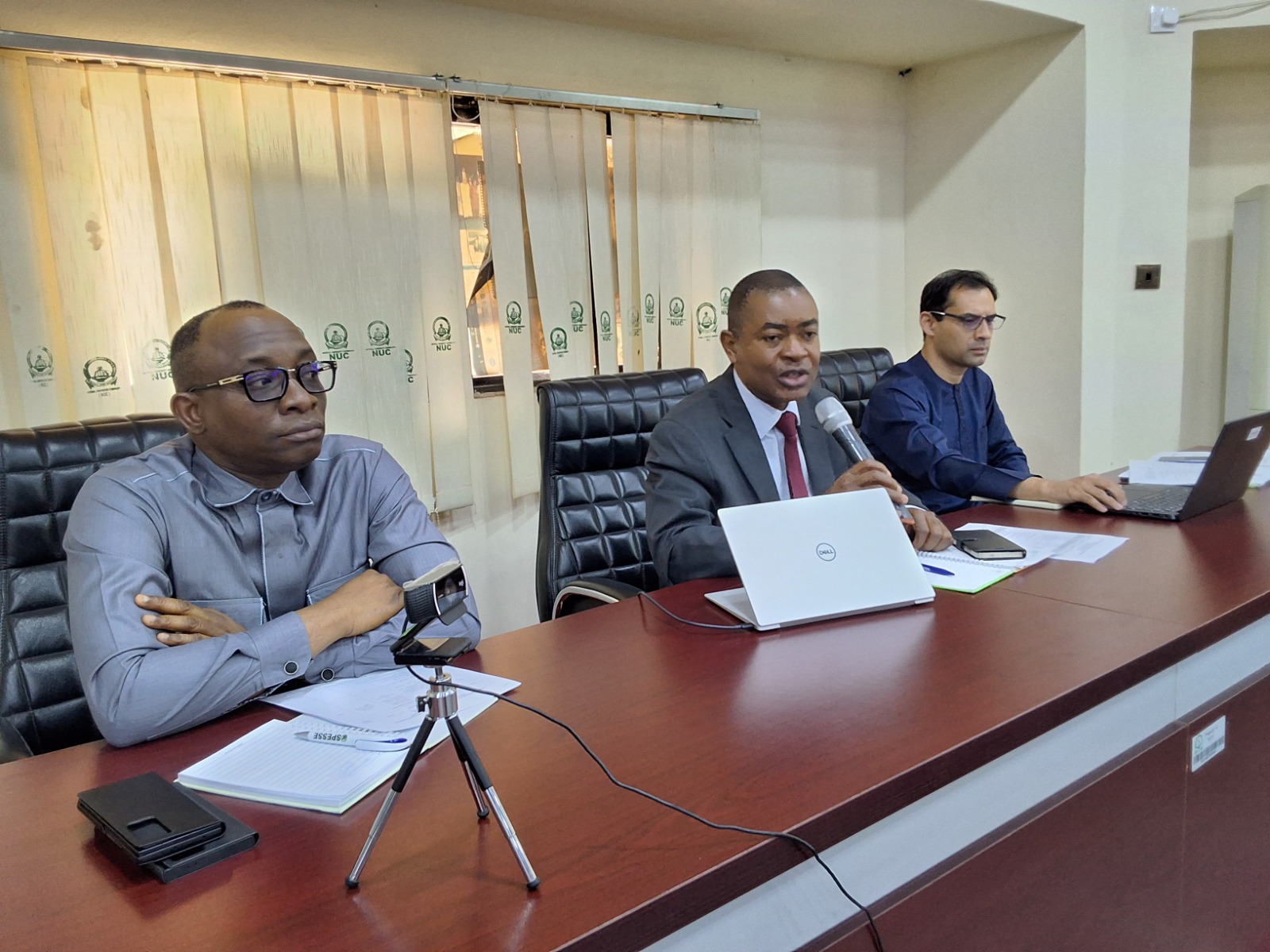
The World Bank reaffirmed its confidence in the project during a recent Implementation Support Mission (ISM) conducted to assess progress, review activities under the original financing and agree on next steps under the Additional Financing.
The mission was led by the World Bank Task Team Leader, Ishtiak Siddique, alongside the National Project Coordinator, Dr Joshua Atah of the NUC.
According to the mission’s Aide Memoire, SPESSE has made “significant progress” since the last review. All four Project Development Objective (PDO) indicators have been fully achieved, while overall Project Implementation Progress for the January 1 to June 30, 2025 period was rated satisfactory following independent verification.
The verification also confirmed that 12 of the 18 Performance-Based Conditions (PBCs) have been met or exceeded. Five additional PBCs are scheduled for completion by June 30, 2026, with the remaining targets aligned with the project’s closing timeline.
As part of the mission, the World Bank team engaged with key national and state-level stakeholders, including the SPESSE National Facilitation Implementation Unit at the NUC, the Bureau of Public Procurement (BPP), the Federal Ministry of Women Affairs, the Federal Ministry of Environment and the Federal Ministry of Finance.
The team also assessed activities at the six Centres of Excellence hosted by Ahmadu Bello University, Zaria; Abubakar Tafawa Balewa University, Bauchi; Federal University of Agriculture, Makurdi; Federal University of Technology, Owerri; University of Benin; and the University of Lagos.
Presentations by the centres detailed milestones achieved, progress towards PDO targets, international accreditations, disbursement-linked indicators, student exchange programmes and tracer studies, all of which highlighted the growing impact of SPESSE nationwide.
One of the project’s major milestones is the introduction of professional certification examinations in procurement, environmental safeguards and social safeguards. Conducted online between April and June 2025, the examinations produced 3,429 successful candidates, including 2,121 in procurement, 855 in social safeguards and 453 in environmental safeguards.
Beyond certification, more than 85,000 participants have benefited from SPESSE training programmes across Tracks A to E at the Centres of Excellence. Despite early disruptions caused by the COVID-19 pandemic, the project has maintained steady implementation and delivery.
The project’s strong performance has positioned SPESSE as one of Nigeria’s standout donor-supported initiatives. Director of the International Economic Relations Department at the Federal Ministry of Finance, Mr Stanley Nyeso George, noted that achieving an overall satisfactory rating at this stage of implementation is rare among development projects.
He and other stakeholders commended the NUC, under both its current and past leadership, as well as Dr Atah, for effective project coordination. Centre Leaders and their teams were also praised for their commitment and results.
In recognition of the gains recorded, the World Bank approved Additional Financing to extend SPESSE’s lifespan until June 2026, citing improved outcomes and strong alignment with development objectives.
With the new funding, the project is expected to further deepen procurement reforms, expand online training platforms and strengthen institutional capacity, delivering long-term benefits to Nigeria’s public sector, private enterprises and local communities.
Stakeholders stressed that attention remains focused on translating training and certification outcomes into measurable improvements in transparency, efficiency and inclusiveness within Nigeria’s procurement system.
In a move to institutionalise the reforms, the Bureau of Public Procurement has initiated steps to make SPESSE courses mandatory for the professional certification of all procurement officers. The Director-General of the BPP, Dr Adebowale Adedokun, disclosed this during a high-level review meeting with the World Bank at the 2025 SPESSE ISM in Abuja.
Dr Adedokun said the proposal, which has received preliminary approval from the Head of Service, will be reflected in the revised circular governing the procurement cadre. He reaffirmed the Bureau’s commitment to implementing all project objectives, including the transition to e-procurement.
Both the World Bank and the BPP reiterated their commitment to ensuring the sustained success of SPESSE, widely regarded as a cornerstone of Nigeria’s drive towards sustainable procurement and responsible governance.